The Bare Minimum Plan For Low Energy Days

The Bare Minimum Plan
As someone who has lived with low energy for over 15 years, the bare minimum plan is one of my most relied-upon tools.
When working towards goals – whether personal or professional- it can be easy to feel overwhelmed quickly. Often, you’re focusing on more than one project alongside daily life, which is why being energy-aware is crucial.
Some days you’ll feel on top of everything: things are flowing well, your energy is consistent, and you’re ticking off your tasks.
But there will also be days when the smallest tasks feel like climbing Everest. Energy is low, your brain struggles to concentrate, and this can tip you into a negative mindset and leave you feeling overwhelmed.
One key mistake on these kinds of days is to try to push through and continue as normal. What tends to happen is you get nothing done, and you end the day feeling more exhausted, less motivated, and with little progress.
In this blog, we look at how you can learn how you can use a bare minimum plan to give yourself the space you need to prioritise rest, while still maintaining some consistency without impacting your already depleted energy levels.
*Affiliate Disclosure: Some links in this post may contain affiliate links. If you purchase something via the link, I may receive a small commission. This doesn’t affect the price you pay.
If you have any questions, reach out for a chat at info@quietlyconquer.com or check out my other blogs
Table of Contents
What is a Bare Minimum Plan?
A bare minimum plan is a gentle productivity approach that helps you stay consistent as you work towards goals, without trying to push through or overwhelm yourself. It’s about intentionally choosing not to keep up with your usual pace, lowering your expectations, and working toward smaller, more realistic goals.
The bare minimum plan isn’t about slacking off or being lazy; it’s about protecting your energy so you don’t trigger an energy crash that can leave you burnt out for days.
A bare minimum plan helps you stay in control of both your energy and your progress toward your goals. This is something that brings a level of consistency that’s often missing when you live with low energy or chronic health issues.
That feeling of one step forward and ten back can mess with your head and leave you feeling incapable of achieving your goals. With a bare minimum plan, you can find a way to work with your energy. This builds self-trust, and in turn, your confidence.
Why This Approach Works
When you’re functioning on an empty tank of energy, the likelihood of burnout is much higher. The boom-bust cycle becomes a real threat. The impact this can then have upon your mindset adds to the feeling of pressure and overwhelm, keeping you stuck in this negative cycle.
When you choose to step away from the all-or-nothing approach to productivity and life in general, you can start building sustainable momentum.
A bare minimum plan helps by interrupting this cycle and giving you back confidence and more regulated energy levels. It helps you to:
- Understand your body more
- Break down the task into manageable steps
- Reduce pressure and overwhelm
- Create sustainable momentum
- Become intentional with your actions
- Build confidence and self-trust
- Achieve goals without compromising your energy
Pacing not only protects your energy, but it also allows you to achieve your goals a lot quicker than you may think. With fewer ‘crash’ days where you are unable to work at all, this balanced approach will save you time and energy in the long term.
When to Use the Bare Minimum Plan
This is completely personal to you and your situation. For some, the bare minimum plan may account for 70-80% of your week; for others, it may be a lot less. I have conditions that cause my energy to fluctuate, so I tend to use bare minimum planning when I know my energy has dropped, until I have felt energised for longer than 2 weeks.
Low / Fluctuating Energy – If, like me, you manage low or fluctuating energy, a bare minimum plan gives you back a level of certainty. You know what you can do on those days, and that’s enough! It keeps your mindset positive; the power of a tiny win can be hugely uplifting.
Physically or Mentally Drained – If, for whatever reason, you’re simply exhausted, the bare minimum plan helps you to keep things ticking over until you can rest and recover. It can be a great way to bridge the gap rather than stop completely or attempt to push through.
Time Limitations – If you don’t manage low-energy conditions, but live a busy life, and want to achieve goals alongside external commitments, the bare minimum plan can help you identify the best possible way to get you there without adding too much pressure to an already full life.
Loss of Motivation – If motivation has dropped and you’re struggling to find your rhythm again, a bare minimum plan can help you remove pressure and shift the block you’re facing. When you step back and are intentional with the time or energy available to you, it becomes less daunting to start.
Low Mood / Anxious – As with loss of motivation, it’s hard to think clearly when your brain is in survival mode. All-or-nothing thinking can lead you to abandon the day completely, increasing your anxiety and then feeling reproachful at the end of the day. With a more intentional plan for the day and less pressure, work can feel easier. This can improve your mood and ease those worries.
How to Create a Bare Minimum Plan
Spend a week or two monitoring both your energy levels and the tasks you set for yourself each day. A time and energy audit can help with this.
Once you understand your baseline energy and weekly commitments, you can start creating a more realistic plan. Base this first plan on a ‘normal’ or average energy week. This will be your go-to plan when things are ticking along okay.
This snapshot will give you a bird’s-eye view from which you can create your bare minimum plan for the lower energy days or weeks.
Simple Steps:
The first step for the bare minimum plan is to identify key tasks. These are the things that you need to complete each day and week. For example, client calls, meetings, admin tasks, payroll, etc.
Further down the line, you’ll likely have adapted versions of this, where some days or weeks you can do more or less at certain times. For now, focus on creating your bare minimum “master” plan. This will be the base plan that you can use and adapt as needed.
Once you have noted all of the key tasks, create a plan. It’s time to map out your day and week. You can download a free printable for this part, or visit the Quietly Conquer store on Etsy to purchase the Pacing Planner or the Bare Minimum Planning Kit.
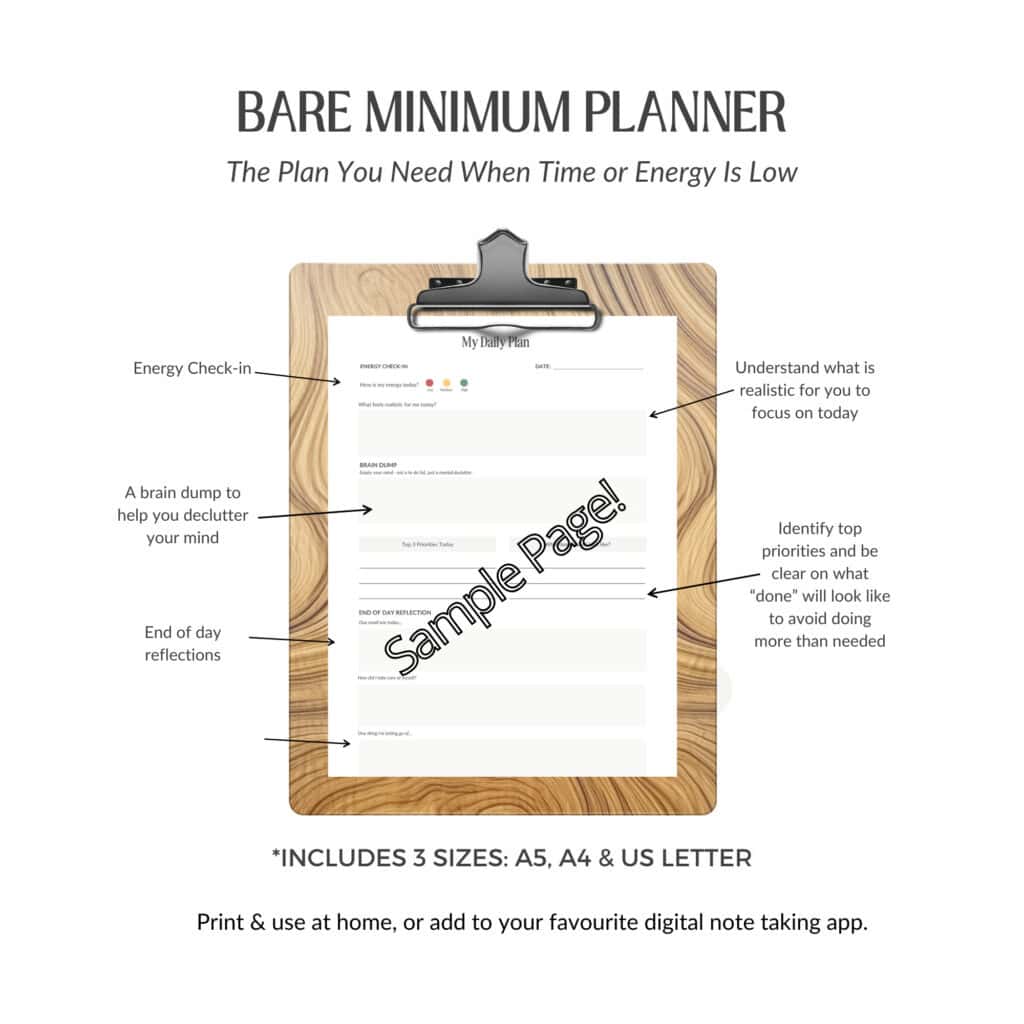
The Bare Minimum Planning Kit
A gentle, structured planning kit for low-energy days designed to help you stay consistent without pushing through, burning out, or giving up. Build your own bare minimum plan – a flexible, intentional approach to productivity that works with your energy, not against it.
If you’re using or creating your own planner page, include some of the following details:
Energy check-in:
- “How is my energy today?” You can use Low, Medium, High – or the traffic light system – Red, Amber, Green.
- “What feels realistic for me today?” This is where you pay attention to the output needed for each task and stay mindful of extra rest breaks to recover.
Mind / Brain Dump:
Use a brain dump to empty your mind of worries. Try not to use it as a to-do list, but more of a mental declutter to help you think more clearly. You may choose to write down everything that needs your attention over the next few days.
Task List:
Once you have an awareness of what’s on your mind as well as your energy levels and mood for today, it’s time to list your tasks.
Looking at your brain dump, choose up to three manageable tasks that you would like to complete today. Make these as small as possible. If it’s one big task, break it into three smaller ones. The key is to avoid overwhelm. You may simply choose to check emails, reply to one message, or organise some files.
Remember, there’s no right or wrong way to do this; it will be unique to you and your personal circumstances. The tasks you set for yourself need to feel doable, even on your lowest-energy day. They could be a mix of personal and work – take a shower, follow up on one email, and rearrange calls for another day.
Your bare minimum plan gives you permission to slow things down.
Personalising Your Bare Minimum Plan
The steps above guide how to approach your planning, but like everything, it needs to be personal and unique to you and the context you’re creating it for.
Some key points to consider:
What does “Done” look like for you?
Set clear, measurable boundaries for each task you set. This prevents you from feeling like you have to keep going until a certain point. The more clarity you have on this, the less likely you are to overdo it.
For example, if you choose “Deal with emails” as one task. What if several important ones need your attention? What if there is more than one that needs a reply? What could opening a certain email mean? Could it lead to additional tasks to deal with the email?
Giving yourself a clear finish line removes the pressure to “just do a little more”. A list like the one below gives you clearly defined end goals and shuts down the risk of getting caught up in things.
- Create a list of 3 tasks for this week
- Reply to one email today
- Journal for 5 minutes
Create a More Flexible Plan
On days when energy is extremely low, you may choose not to create a plan at all and rest. On other days, you may need a simple approach. For example:
“This morning I will organise some files on the computer, then rest this afternoon.”
End of Day Reflections
Less formal than an end-of-day review, making time to reflect on the day is a great way to gently switch off from the day’s tasks and the “shoulds” that can crop up.
Journaling is a nice way to do this, or you can simply make some notes in your planner, or allow yourself a few minutes to run things through in your mind.
Remember to focus on the small wins and to speak to yourself with compassion. Celebrate choosing to take care of yourself and for giving yourself permission to slow down today.
These reflections aren’t about productivity; they’re about recognising effort and reinforcing the belief that it’s okay to do things at a slower pace.
Tools, Resources & Support
Etsy – Ready to create your own online store? Etsy is a brilliant shopping platform that’s used by millions. Setting up your store is simple, and when you sign up with this link, we both get 40 free listings!
Pacing Planner – This printable digital pacing planner includes energy awareness activities, a task (brain) dump page, a daily planner page, & 3 sizes (A5, A4, US Letter). Designed to help you manage your daily routine and achieve your goals without burning out.
90-Day Planner – This printable 90-day planner is the perfect companion as you set your focus for the next 3 months. Use it every 90 days to help build consistent habits and achieve your goals with ease. With a focus on intentional planning and moving forward at your own pace, it’s the perfect companion to see you through to the end of the year.
Skool – Create your own community on the ever-growing go-to platform for professionals, coaches, entrepreneurs, hobbyists and more. For as little as $9 per month, avoid the headache of using social media platforms to run your business. It’s a user-friendly platform and a great space to host your membership and community! Since joining Skool, I’ll never go back to hosting on a website or social media, and it significantly limits doomscrolling!
Grow With Evelyn – Evelyn is a coach/mentor I’ve been following for years. She overdelivers every single day. If you’re new to coaching or business in general, GWE is full of lessons, templates, live training, and an amazing community of people who want to help each other. Evelyn is a pro at ads – esp. on Facebook / Insta. So, if growth is your thing, I cannot recommend Evelyn and this community enough!
Time and Energy Audit – This free printable helps you discover where your time really goes with this free time audit worksheet. Use the energy rating scale to create a more balanced week. Includes time-blocking schedules you can use as a printable or with a digital note-taking app.
Final Thoughts
You don’t always need to do lots to make consistent progress. If you need to step back a little, you haven’t failed. You can still work towards your goal, but with intention and a balanced approach.
Sometimes the best thing you can do for yourself and the goals you’re working towards is to stop or move to a less intense approach. That is why a bare-minimum plan is so helpful.
When you consistently show up in small, manageable ways, you’re telling yourself that you can still do this – even if it is a little slower than you thought.
Uncertainty with fluctuating health and energy can be soul-destroying, causing you to give up hope quickly. I know this from when I was in the thick of it, especially during the early days when I was so used to being and doing it all professionally, personally, and for my children as a single mother.
As soon as I moved into acceptance, I could think logically about my strengths and limitations. This then helped me find a way to keep moving forward without impacting my energy levels.
A bare minimum plan has enabled me to keep going, keep my mindset positive, and see that there is no need to get swamped by all of the “shoulds”. Letting go of feeling guilty about resting or slowing down was key.
Acknowledging that sometimes you need to work differently will improve your productivity over the longer term, and a bare-minimum plan will help you move easily between working at full capacity and stepping back without disrupting your business or progress toward your goals.
Yes, it can still feel frustrating at times, but I have been able to achieve much more by adopting this intentional approach to my work, businesses and goals.
Are you a therapist, coach, or educator who wants to join a community where you can get psychology-informed tools & resources? The Quiet Creator Community is opening soon! Join the waitlist today. Learn how to create content to enhance your brand and grow your audience ethically and professionally.
The Quiet Creator is the space you need if you’re a therapist, counsellor, coach or educator who wants to offer more.
It’s where you learn to share your expertise through blogs, therapy-style worksheets, and digital products you can sell.
You’ll learn practical skills (writing, design, content creation, digital products) so you can use your own skills, experience, and expertise to reach a wider audience. It includes monthly challenges, Canva templates, lessons, guidance, a community doing it alongside you, and much more!
The focus is on working in a calm, intentional way and learning to work at your own pace to achieve your goals.
If this post helped or you enjoyed reading it, please share one of the images below as it really helps my blog – Thank You!
Meet Lynsey
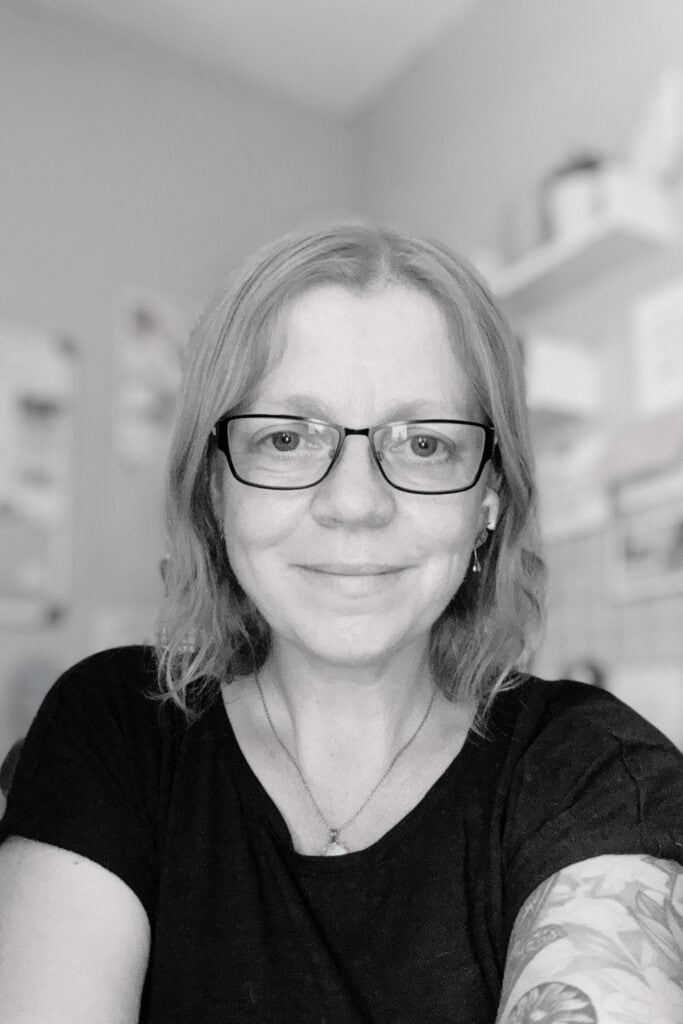
Hey there! I’m Lynsey, a counsellor, coach, and tutor for women who want to create change but feel lost, uncertain, and exhausted. With over 9 years’ experience training, running businesses, and over a decade as a tutor and adult trainer, I’ve learned the value of a gentle, intentional approach to work and life that energises you without draining your energy.
I’ve lived with ME/CFS since 2011, and since then re-trained as a counsellor, and achieved a distinction for my Masters in Counselling and Psychotherapy Practice; all while running 4 businesses!
How? Improving your mindset, finding acceptance in yourself, and developing a gentle, but solution-focused approach to achieving goals is key. It’s not about how fast you move, but about finding your own pace and trusting that you can achieve your goals in your own way, one step at a time.
If you’d like to know more about working with me, you can email me at info@quietlyconquer.com or find me on socials (links in the menu)
Have you seen my online store Quietly Conquer – Find DFY templates, downloads and more!